Feeding the swim with a plan instead of a bucket
Groundbait is what makes feeder fishing different from simply waiting on the bottom. This guide explains how mixes behave, how to open a session and how to keep a steady feeding rhythm.
What groundbait does in the swim
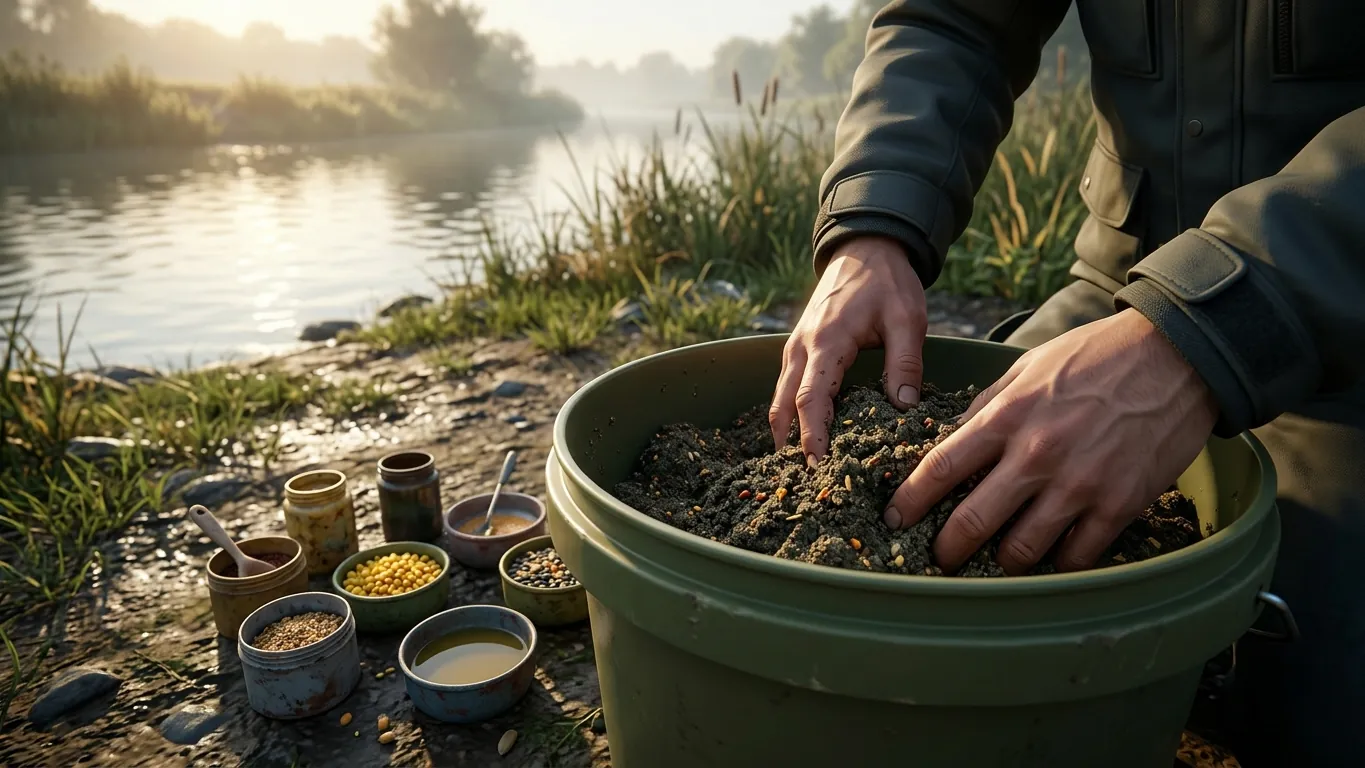
Groundbait has two jobs. It attracts fish to the area around your hook bait, and it holds their interest long enough for them to find that bait. A good mix creates a scent and particle trail in the water and leaves something on the bottom worth staying for.
In Russian Fishing 4, groundbait is typically prepared by combining a base with optional components such as flavors or particle additives. The exact options depend on what you have unlocked and what the game offers at your level, but the underlying idea stays the same: the mix should appeal to the fish you are targeting and suit the conditions at the venue.
Building a mix around the target fish
Start with the fish, not the bucket. Different species tend to respond to different kinds of feed, and the game reflects this through the attraction of various bases and additives. Before mixing, check the in-game information for the species you want to catch and note which baits and flavors are suggested for it.
Keep the mix and the hook bait consistent with each other. If your groundbait contains particles of a certain type, using a matching hook bait means the fish meet familiar food when they reach your hook. A hook bait that looks completely unrelated to the feed can still work, but consistency usually makes the picture clearer for both you and the fish.
It is also wise to keep notes of which mixes produced bites at which venues. Over time, this becomes your own reference table.
The opening phase: laying down a bed
At the start of a session, the feeding area is empty. Many feeder anglers begin with a series of quick casts, letting the feeder empty on the bottom and retrieving it soon afterward. This lays down a bed of groundbait in a short time.
Accuracy is critical here. If the opening casts are scattered, the bed becomes a loose patchwork rather than a defined spot. Use your far bank marker and the line clip from the very first cast, so the foundation of the session is in the right place.
How many opening casts to make is a judgment call. On a venue with many fish, a modest start may be enough; on a quiet venue, a slightly larger opening bed can help draw fish from further away.

Feeding rhythm once fish arrive
Once the bed is laid, switch to a steadier rhythm. A common approach is to recast at regular intervals even without a bite, so fresh feed keeps arriving in small, controlled amounts. The interval depends on how quickly the feeder empties and how actively fish are feeding.
When bites come regularly, the rhythm often looks after itself, because each catch means a recast and a new portion of feed. When bites slow down, avoid the temptation to pile in large amounts at once. Overfeeding can leave fish with so much food that your hook bait is easy to ignore.
A useful habit is to time your recasts. Even a simple mental count helps you keep the rhythm steady and notice when something has changed.
Signs that the plan needs adjusting
Watch for patterns rather than single events. If bites appear soon after each cast and then stop, the fish may be drawn in by the fresh feed but not held for long; a slightly firmer mix or a shorter recast interval may help. If you see small, tentative movements on the tip but few proper bites, smaller fish may be crowding the area, and a change of hook bait size could be worth trying.
If nothing happens for a long time, the problem may not be the mix at all. Consider the depth, the distance and the time of day, and be ready to move. Groundbait supports a good spot; it rarely rescues a poor one.
Related articles
 The simple bottom rig and why it still matters
A beginner-friendly explainer of bottom fishing rigs in Russian Fishing 4: how sinkers, leaders and hooks work together and how to assemble a first rig.
Read more
 Translating small movements into clear decisions
Learn to read feeder bites in Russian Fishing 4: rod angle, neutral bend, common tip movements, false signals and when to strike.
Read more
 Organizing the hours between the first cast and the last
A practical guide to organizing a feeder session in Russian Fishing 4: choosing a spot, arranging rods, managing time and keeping useful notes.
Read more