The simple bottom rig and why it still matters
Before feeders, there is the plain bottom rig: a weight, a leader and a hook resting on the bed of a lake or river. This article explains its parts and how to put together a reliable first setup in the game.
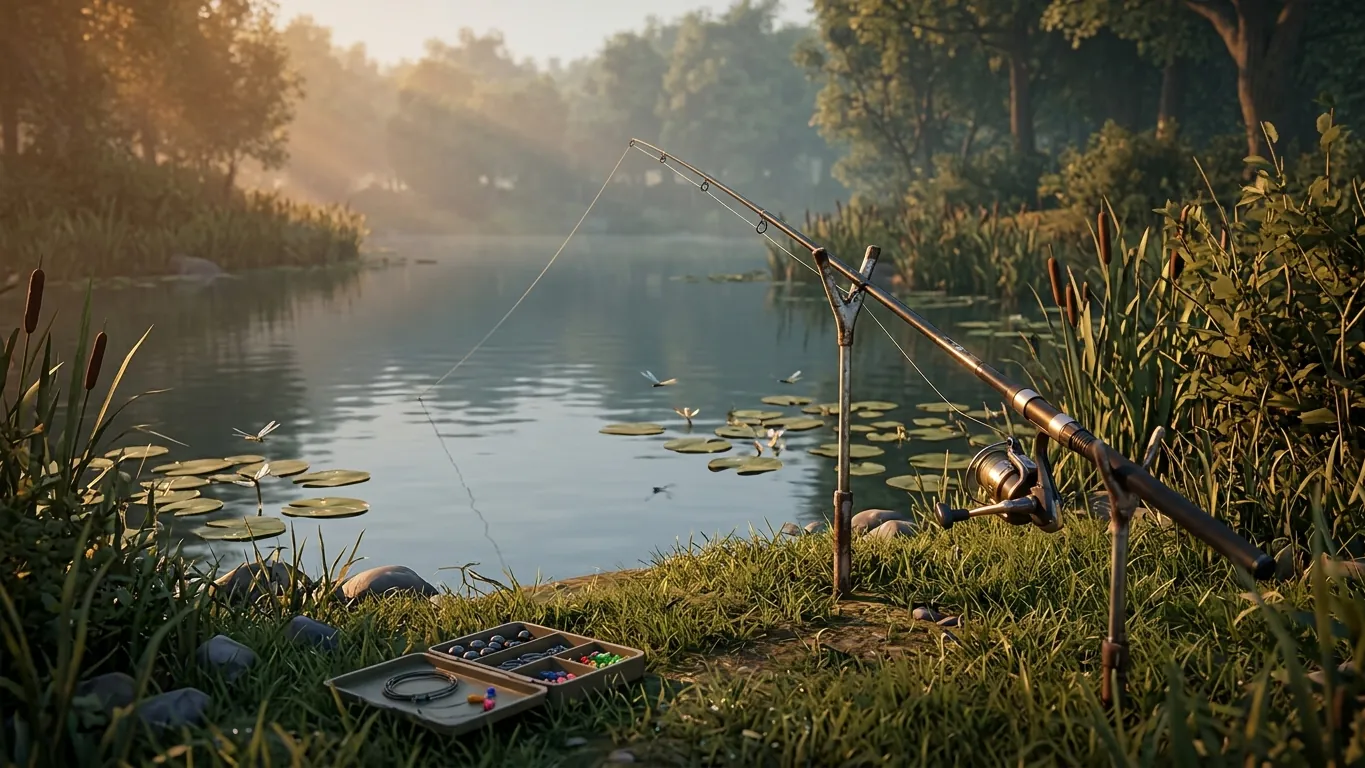
Feeder rig versus classic bottom rig
Both feeder and bottom fishing present a bait on or near the bottom, but they differ in one key way. A feeder rig carries groundbait to the spot with every cast. A classic bottom rig uses a plain weight, often called a sinker or lead, which only holds the bait in place.
In Russian Fishing 4, plain bottom rods and rigs are a natural starting point for many players. They are straightforward to set up, they teach you how depth, distance and bait choice interact, and they remain useful later when you want to fish a spot without introducing extra feed, or when you are spreading several rods across different areas.
Sinkers and how much weight to use
The sinker has two jobs: giving you enough mass to cast and holding the rig on the bottom. As with feeders, the right weight depends on distance and current. On still water, a lighter sinker is usually enough and lands more quietly. On flowing water, you may need more weight to stop the rig from rolling away.
The shape of the sinker can also matter, depending on what the game offers. Flatter shapes tend to grip the bottom better in current, while more rounded shapes cast smoothly and roll more easily. Whichever you use, test it the same way as a feeder: cast, let it settle and watch whether the rod tip stays steady or keeps changing as the rig drifts.
Leader length and its effect on presentation
The leader is the short length of line between the weight and the hook. Its length decides how the bait behaves near the bottom. A short leader keeps the bait close to the sinker, which gives quick, direct bite indication and reduces tangles on the cast. A longer leader lets the bait fall more slowly and settle more freely, which can look more natural to wary fish.
Leader thickness is a balance between strength and subtlety. Thinner leaders are less noticeable and allow small baits to move naturally, but they need careful drag settings during the fight. Thicker leaders are more forgiving but can make small baits behave stiffly. In general, the leader should be the weakest part of the rig, so a break costs you only a hook rather than the whole setup.

Hooks and bait sizing
Hook choice follows bait choice. A small, soft bait needs a small, fine hook that it can cover without hiding the point entirely. A larger, firmer bait needs a hook big enough to leave the point exposed so it can catch when the fish takes the bait.
It can be tempting to use a large hook in the hope of catching larger fish, but a hook that is too large for the bait often reduces bites. In the game, as at a real waterside, balance tends to work better than size. If you are getting many small, quick taps and few fish, try a slightly smaller bait and hook. If small fish are stealing bait constantly, a slightly larger bait may help select bigger fish.
Assembling a first bottom rig
This sequence builds a simple, reliable rig you can adapt later.
- 01
Choose the venue spot
Decide on a depth and distance, and note whether the water is still or flowing.
- 02
Select the sinker
Pick the lightest weight that reaches the spot and holds without rolling.
- 03
Attach the leader
Use a medium-length leader that is weaker than your main line.
- 04
Match hook and bait
Pick a hook that suits the size and texture of the chosen bait.
- 05
Cast and observe
Let the rig settle, set the rod on the stand and watch the tip for a while.
Related articles
 Translating small movements into clear decisions
Learn to read feeder bites in Russian Fishing 4: rod angle, neutral bend, common tip movements, false signals and when to strike.
Read more
 Organizing the hours between the first cast and the last
A practical guide to organizing a feeder session in Russian Fishing 4: choosing a spot, arranging rods, managing time and keeping useful notes.
Read more
 Why the feeder rewards a slower kind of attention
An opinion piece on why patience, observation and small adjustments make feeder fishing in Russian Fishing 4 more rewarding and easier to understand.
Read more