Rod range
The filled feeder weight sits within the rod's casting range.
A feeder rig is a chain of components, and each link affects how far you can cast, how clearly you see bites and how safely you land a fish. This guide follows that chain from the rod butt to the hook.
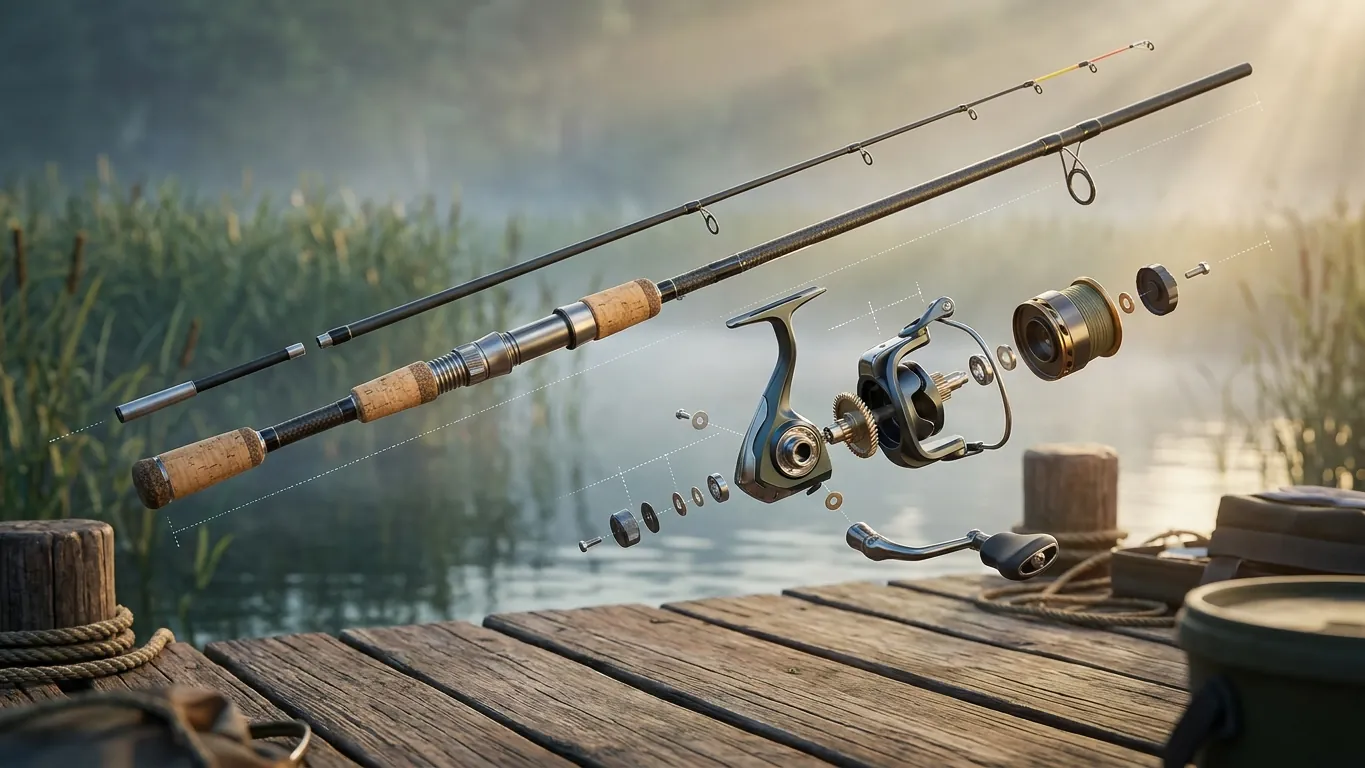
The feeder rod is the backbone of the setup. In Russian Fishing 4, as in real feeder fishing, rods differ in length, in the range of casting weight they are designed for and in how they bend under load.
Length mainly affects casting distance and line control. A longer rod gives a wider casting arc and keeps more line off the water, which helps on wide rivers or when fishing at range. A shorter rod is easier to handle on small, quiet waters where you only need to reach a nearby feature.
The casting weight range tells you which feeders the rod is built to throw. A feeder far heavier than the rod expects puts it under strain, while a feeder that is too light will not load the blank properly and costs you distance. Always check that your planned feeder, filled with groundbait, sits comfortably inside the rod's range.
Action describes where the rod bends. A softer action cushions the fight and protects light leaders; a stiffer action transfers more power on the cast and on the strike.
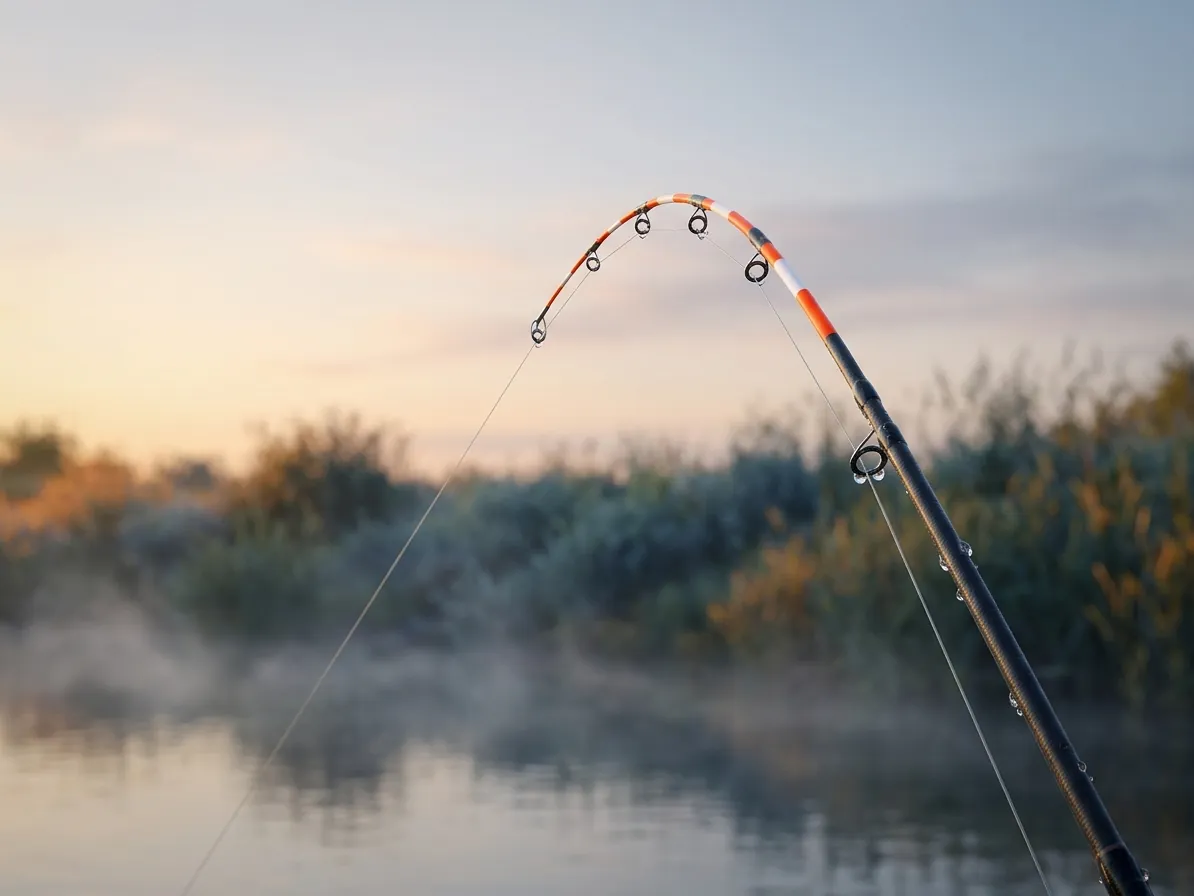
The quiver tip is the most distinctive part of a feeder rod. It is a thin, sensitive section at the very end of the rod, and its job is to show you what is happening on the bottom. Feeder rods in the game usually let you swap tips of different stiffness, often described by a test rating.
Think of the tip as a gauge with a measuring range. A soft tip shows delicate bites clearly, but in strong current or with a heavy feeder it bends so far that it has nothing left to show. A stiff tip copes with flow and weight, but small, cautious bites may barely move it.
The practical rule is to choose the softest tip that still holds a steady, slight bend after the feeder settles. That bend is your neutral position. Any movement away from it, forward or backward, becomes readable information rather than background noise.
If the rod is the backbone, the reel and main line are the drive train. The reel stores line, controls the drag and determines how quickly you can retrieve a feeder for the next cast. For feeder fishing, a smooth drag matters more than raw speed, because many fights happen at distance with relatively light leaders.
The main line connects everything. Thinner line cuts through the air and the water more easily, which helps distance and reduces drag in current. Thicker line tolerates more strain and abrasion. Some players prefer braided main line for its low stretch and sharp bite indication, while others choose monofilament for its cushioning effect during the fight.
Whatever you choose, the main line should be noticeably stronger than the leader. That way, if something has to give, it is the short leader near the hook and not the line holding your feeder.
The leader is the short, usually thinner section between the feeder rig and the hook. It lets the bait move a little more naturally than if it were tied directly to the heavy part of the setup, and it acts as the weak point that protects the rest of the tackle.
Leader length shapes presentation. A short leader keeps the hook bait close to the feeder and the groundbait pile, which suits active fish. A longer leader lets the bait settle more slowly and sit slightly away from the feeder, which can suit cautious fish.
The hook should match the bait, not the fish you hope to catch. A small bait on a large hook looks unnatural; a large bait on a tiny hook may mask the point. Balance between hook, bait and leader is often more important than any single premium component.
Before casting, run through the chain from top to bottom and confirm that each link suits the plan.
The filled feeder weight sits within the rod's casting range.
The quiver tip holds a slight, steady bend once the feeder settles.
Main line is stronger than the leader, so a break happens at the hook end.
Hook size matches the bait, and leader length matches the fish's mood.
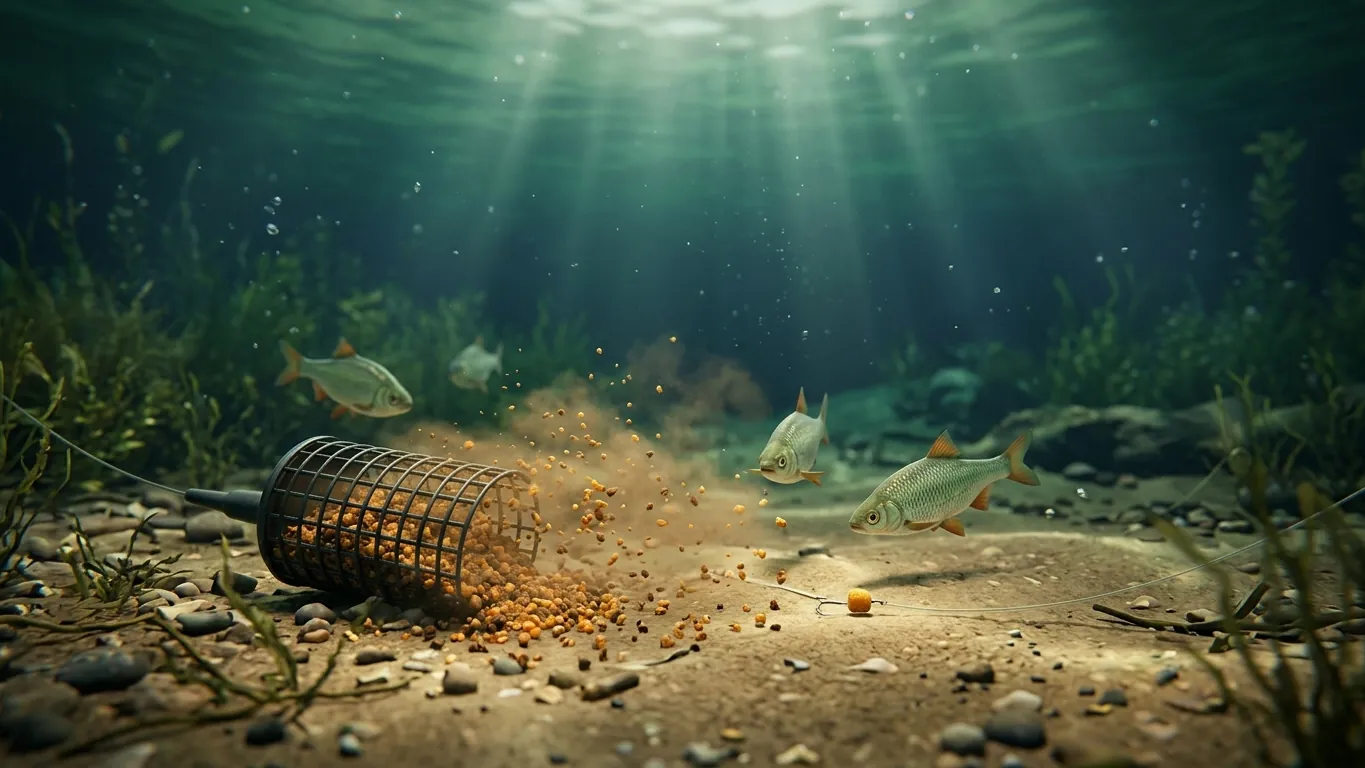 Choosing the small container that does a big job
How different feeder types in Russian Fishing 4 deliver groundbait, why weight matters, and how to choose a feeder for distance, flow and fish mood.
Read more
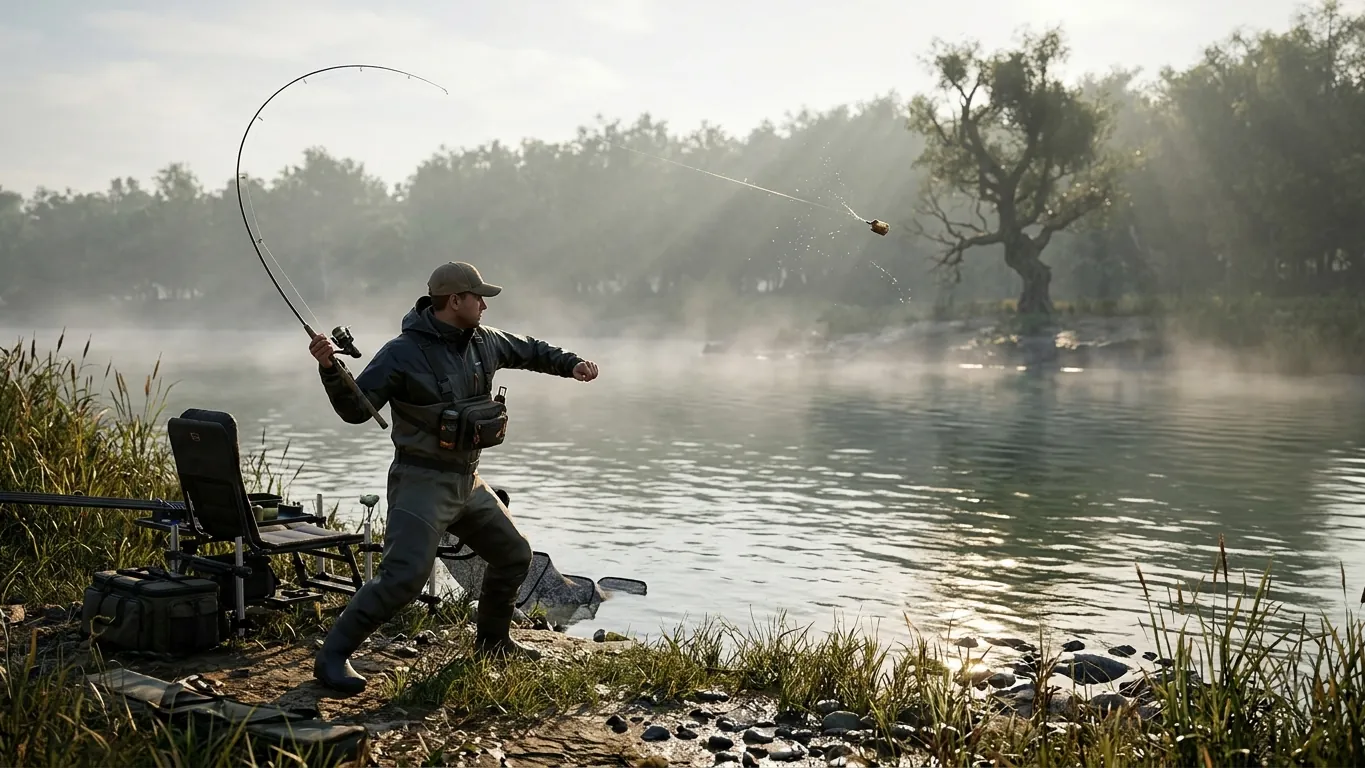 Putting every feeder in the same small circle
Learn how to land every feeder cast on the same spot in Russian Fishing 4 using far bank markers, the line clip and a repeatable casting routine.
Read more
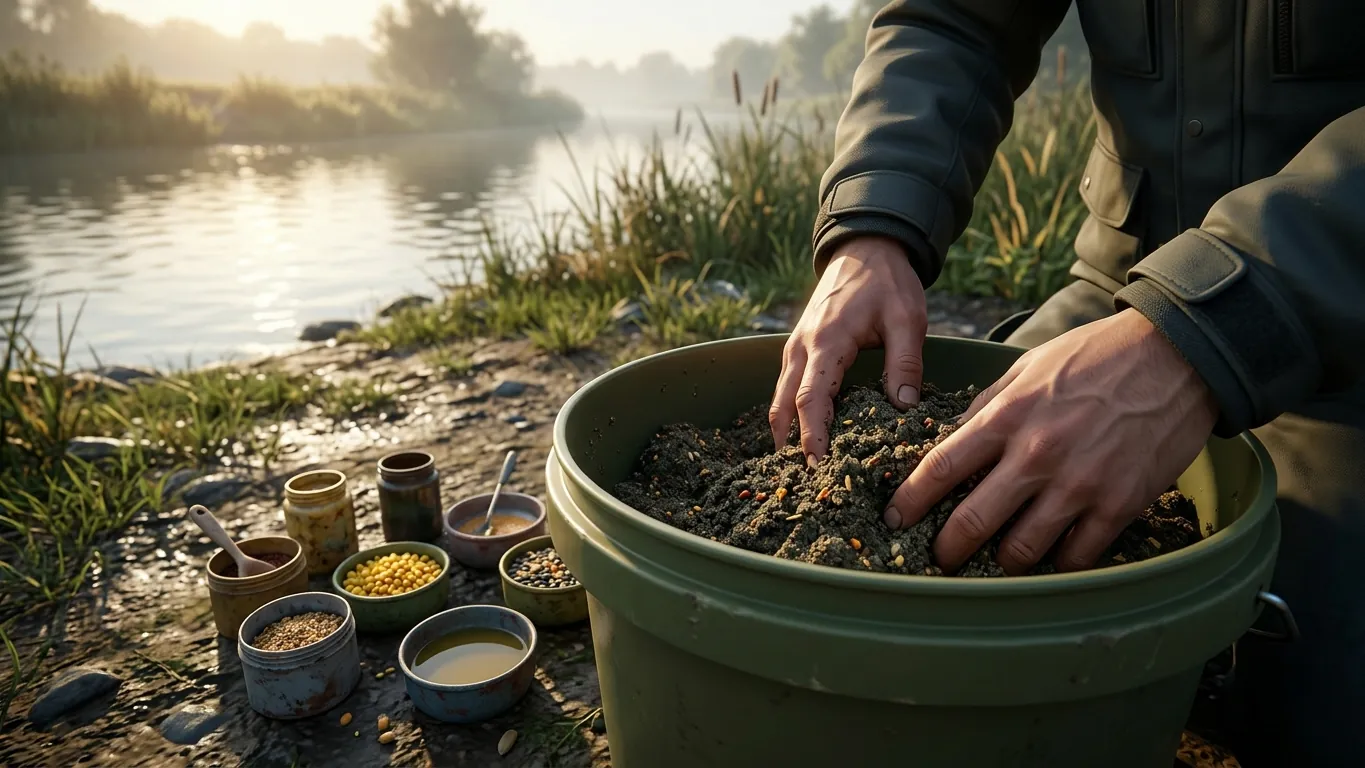 Feeding the swim with a plan instead of a bucket
How groundbait works in Russian Fishing 4 feeder sessions, how to build a mix around target fish, and how to pace feeding as the session develops.
Read more