Why the feeder rewards a slower kind of attention
Feeder fishing in Russian Fishing 4 can be played quickly, but this opinion piece argues that a slower, more methodical approach reveals more about how the game's mechanics work and makes sessions more satisfying.

Feeder fishing as a rhythm
Feeder fishing is built on repetition. Cast, settle, watch, recast. To someone looking in from outside, it may seem monotonous. But inside that repetition lies its appeal. Each cycle is a small experiment, and the results of those experiments, gathered over a session, tell a story about the water, the fish and your own setup.
In my view, the best way to enjoy feeder fishing in the game is to embrace that rhythm rather than fight it. A steady, unhurried pace lets you notice the details that make each session different: how the tip settles, how quickly bites follow a cast, how fish respond as the in-game day changes.
What hurried sessions tend to miss
When the goal is simply to catch as much as possible as fast as possible, it is easy to change several things at once. A new feeder, a different bait, a fresh spot and a new mix may all be introduced within minutes. If bites improve, you do not know which change helped. If they get worse, you do not know which change hurt.
Hurried sessions also tend to blur the feeding area. Casts become less careful, the groundbait spreads wider, and the focused spot that feeder fishing depends on never quite forms. The rods are working hard, but the session lacks a clear shape.
None of this is wrong in a game played for enjoyment. Yet it often leaves players with the sense that results are random, when in fact they are simply hard to read.
Small adjustments, clearer lessons
A methodical approach turns that around. Change one thing at a time, give it a reasonable period to show its effect, and note what happens. Perhaps you lengthen a leader on one rod while leaving the other unchanged. Perhaps you switch to a slightly heavier feeder and watch whether the tip becomes steadier.
These small adjustments produce clear lessons. Over several sessions, they build an understanding that no single article can provide, because it is grounded in your own observations at the venues you enjoy. The game's detail around tackle and feeding is, in my opinion, best appreciated this way.
Where speed still has its place
This is not an argument against ever moving quickly. There are moments in feeder fishing where pace matters. The opening phase of a session, when you lay down a bed of groundbait, often calls for several quick casts. When fish are feeding actively and bites come one after another, a brisk rhythm keeps them interested.
The point is that speed works best as a deliberate choice rather than a default. Knowing when to speed up and when to slow down is itself part of the craft, and that judgment develops most easily when your usual pace is calm enough to observe what is going on.
A personal rule of thumb
If I had to summarize this view in one habit, it would be this: before changing anything, watch the tip for a while and ask what it is telling you. Often the answer is simply that the session needs more time. Sometimes the tip reveals a problem, such as a feeder that is too light or a leader that is too short, and the change becomes obvious.
Players enjoy the game in many ways, and there is no single correct approach. But for anyone who finds feeder fishing frustrating or confusing, trying a slower, more observant session is a worthwhile experiment. It may change how the whole method feels.
Related articles
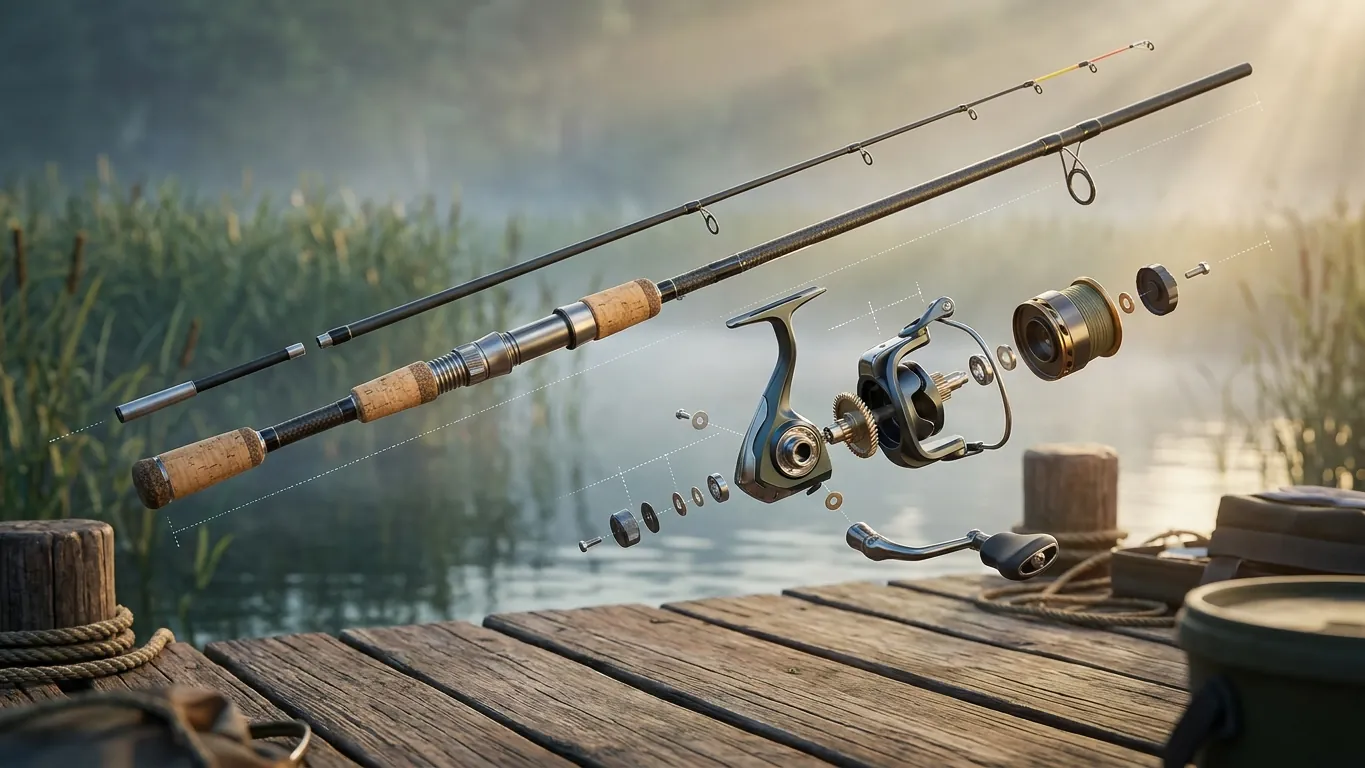 How a feeder setup fits together, part by part
A part-by-part look at feeder tackle in Russian Fishing 4: rod, quiver tip, reel, main line, leader and hook, and how they work together.
Read more
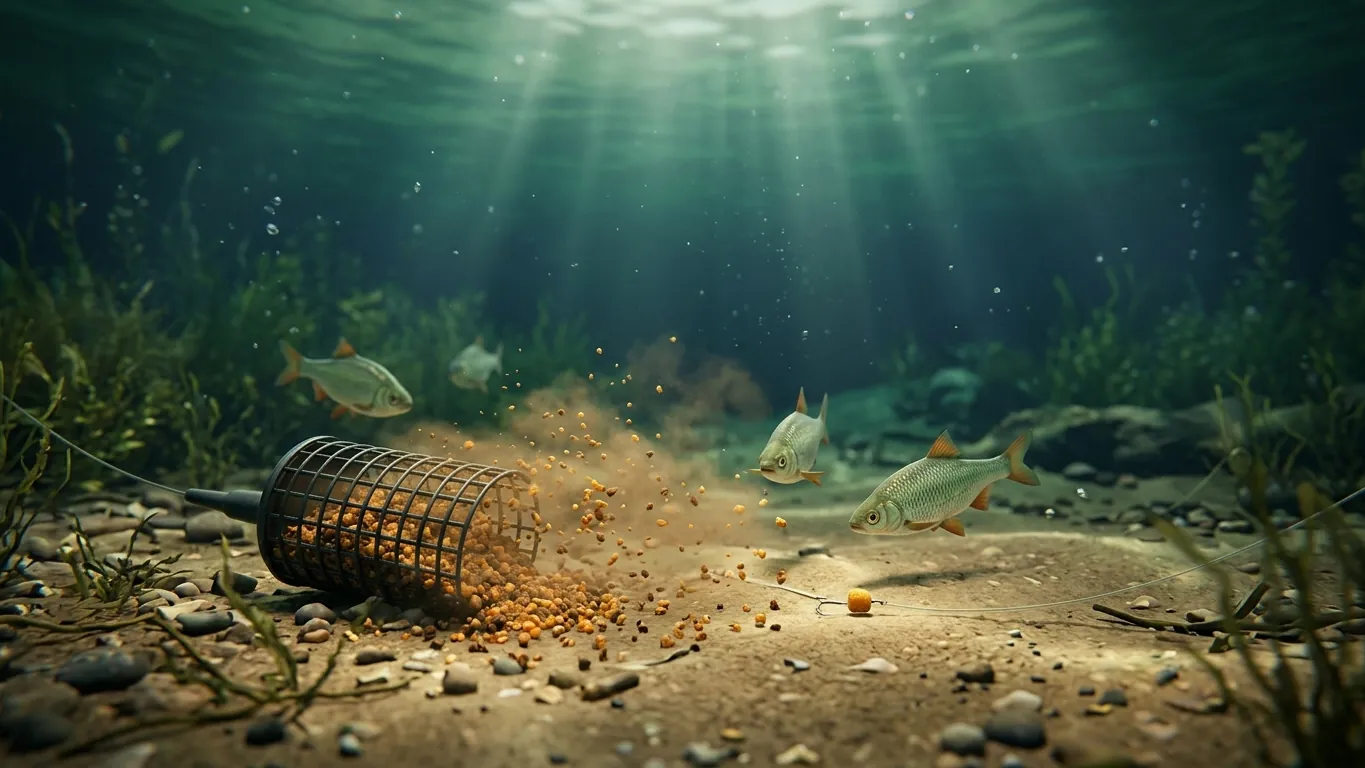 Choosing the small container that does a big job
How different feeder types in Russian Fishing 4 deliver groundbait, why weight matters, and how to choose a feeder for distance, flow and fish mood.
Read more
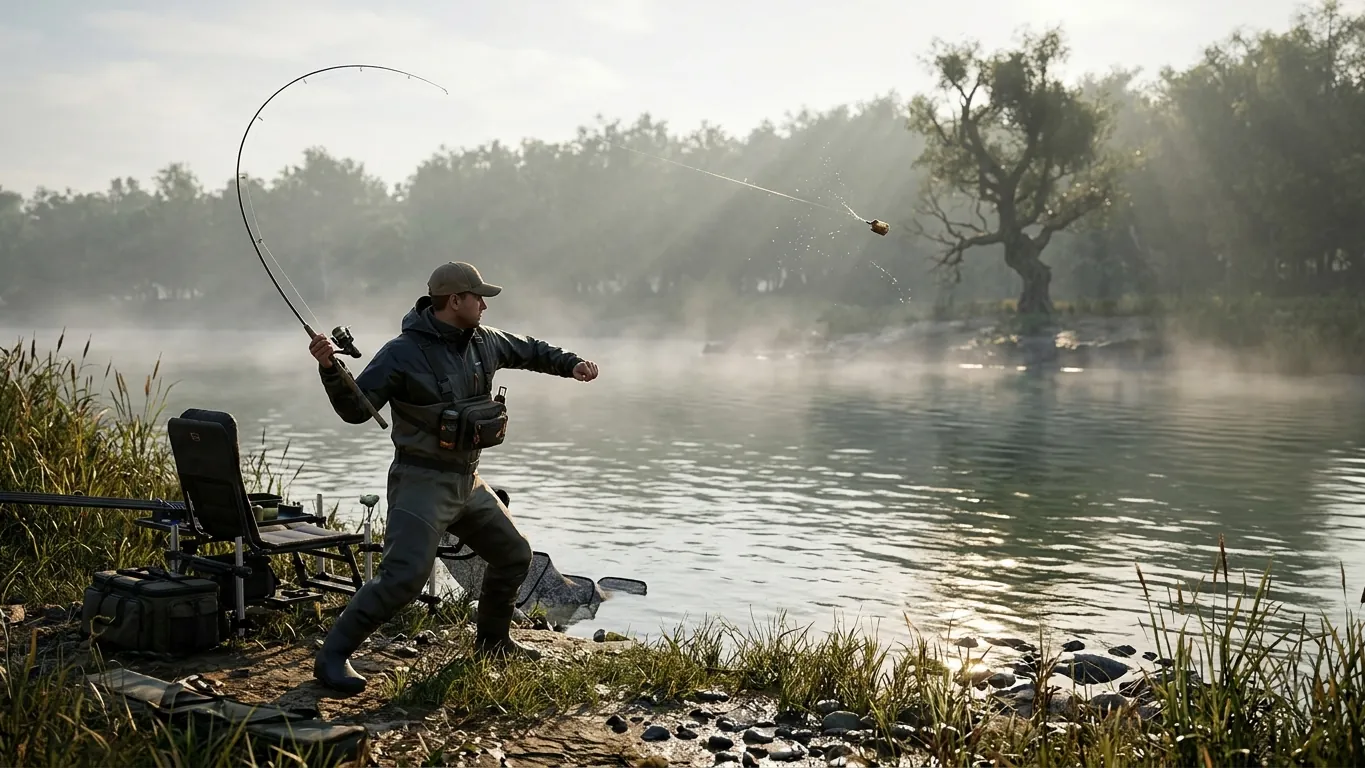 Putting every feeder in the same small circle
Learn how to land every feeder cast on the same spot in Russian Fishing 4 using far bank markers, the line clip and a repeatable casting routine.
Read more